
METHODS · MEASUREMENTS · VALIDATION
Technical clarity is part of the craft.
GRISTORA is designed around brewing information that can be understood, checked and discussed. These principles describe the standard it sets.

DESIGN PRINCIPLES
Trust comes from showing the work.
Good technical software makes assumptions visible and leaves room for human judgement.
- 01
Explain the method
A technical result should be accompanied by its method, inputs, units, assumptions, example and limitations. A number without context is difficult to review or reproduce.
- 02
Make units explicit
GRISTORA uses consistent internal values and regional display. Every explanation distinguishes US customary, Imperial and metric units where relevant and shows conversions clearly.
- 03
Separate target from actual
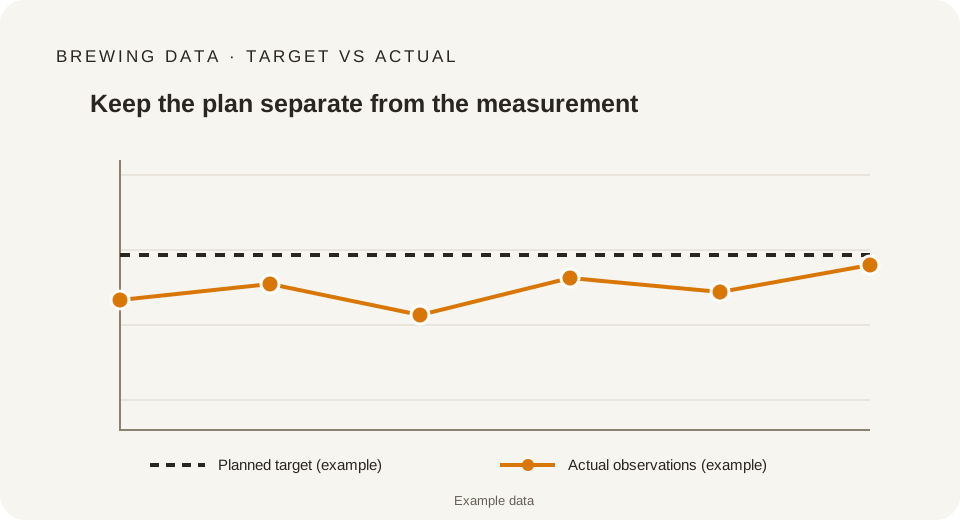
A recipe target is not a measurement. Planned values and observed results should remain distinguishable so that a batch record reflects what happened rather than silently rewriting the recipe.
- 04
Keep measurement context
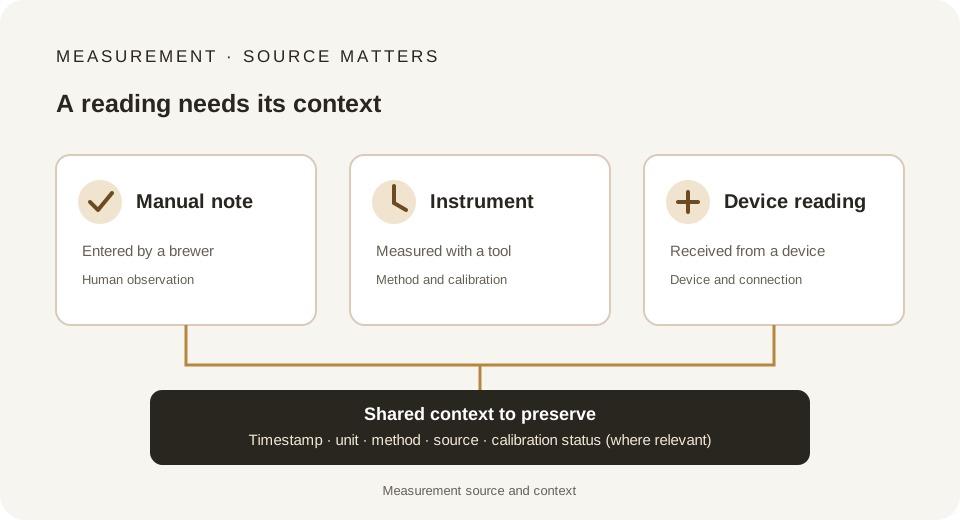
Manual, paper and connected-device readings have different origins and limitations. The record model keeps source and context visible wherever those inputs are supported.
- 05
Validate before estimating
Calculation methods require reference cases and real brewing data.
- 06
Keep people in control
Estimates inform a brewer's review; they never silently change recipes, equipment profiles or process settings. A process change needs an explicit user decision.
BEFORE A TECHNICAL CLAIM IS PUBLISHED
Evidence before confidence.
Each public calculation or technical guide should be reviewed against a repeatable evidence checklist:
- Named method and authoritative reference.
- Inputs, units, defaults and assumptions.
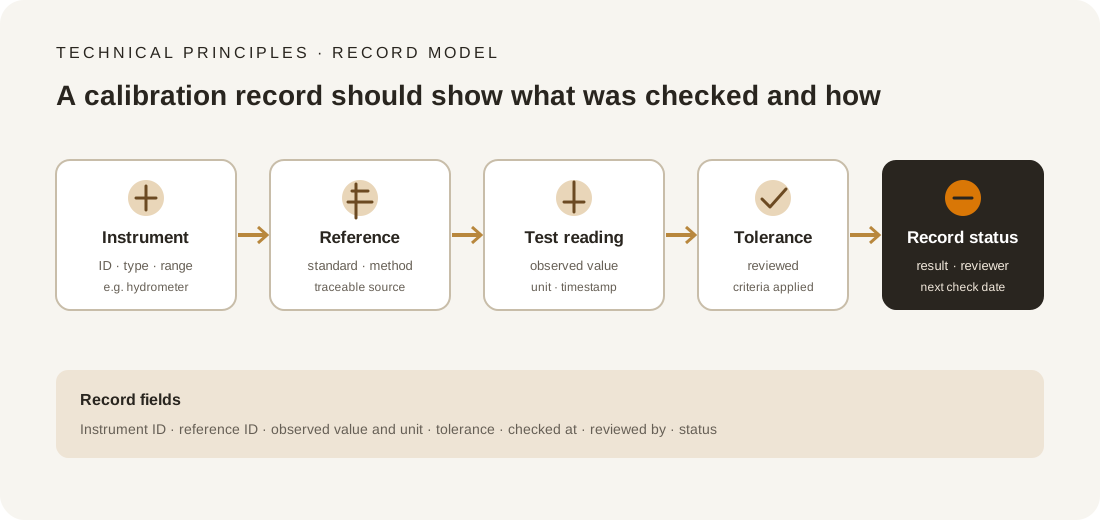
- Worked example with expected result and tolerance.
- Known limitations and conditions where the method should not be used.
- Reviewer, validation date and version of the method or engine.
CONTINUE EXPLORING
See how the principles map to real brewing work.
Homebrewers and professional breweries have different workflows. Explore each path and the product areas.